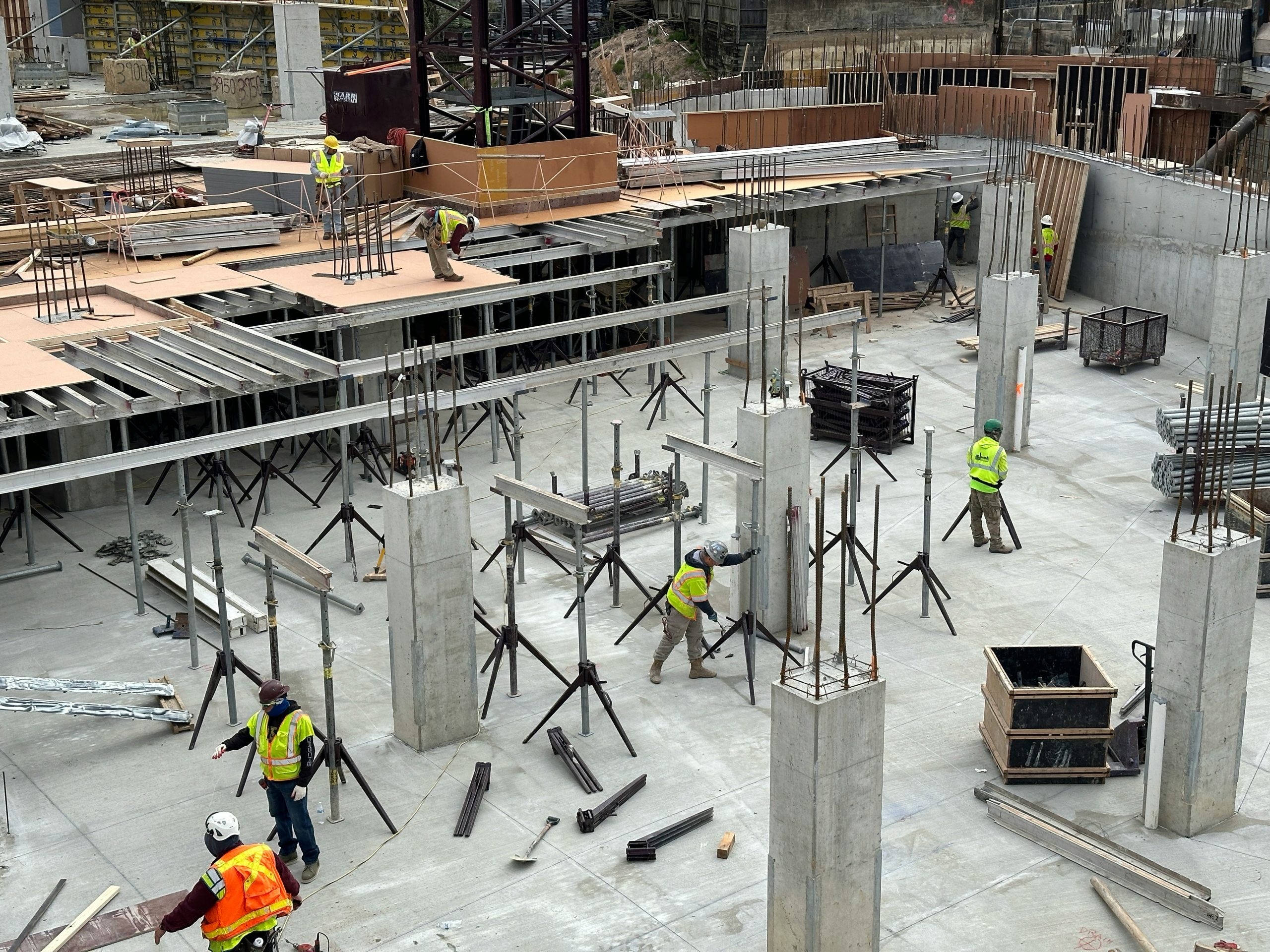
Disruption is one of the most common and most contested issues in UK construction. Unlike delay, which can often be demonstrated through critical path analysis, disruption is fundamentally about loss of productivity. It arises in circumstances such as out‑of‑sequence working, restricted access, congestion, late information, and repeated re‑work.
Without clear and credible contemporaneous evidence, even genuine loss of productivity can be difficult to recover. Tribunals expect a factual narrative supported by records, not assumptions or broad assertions.
This article sets out practical, commercially realistic strategies for evidencing disruption effectively, supported by established principles from UK case law.
- You may also be interested in reading: Documenting Disruption: Practical, Evidence‑Led Strategies for Strong Construction Claims
Start with the contract—but don’t stop there
Most standard forms, including JCT and NEC, require early warnings, notification of likely effects, and submission of records to support loss and expense. Missing a notice deadline can undermine entitlement, regardless of the strength of the underlying facts.
But formal notice alone is not enough. A tribunal will want a clear, structured explanation of:
- what happened
- when it happened
- why it happened
- how it affected productivity
- how the loss has been valued
That narrative must be grounded in contemporaneous project evidence.
Contemporaneous records carry the most weight
Disruption claims succeed when the facts were recorded at the time—not reconstructed afterwards. Retrospective accounts, no matter how honest, carry less weight unless they are backed by documents generated during the project.
Useful records include:
- daily site diaries and supervisor notes
- labour allocation sheets
- plant and equipment logs
- delivery records
- RFI and design information logs
- dated site photographs and videos
- internal correspondence showing issues as they developed
Good evidence is daily, detailed, and dated. The aim is to record what happened factually, without hindsight or emotion.
Separate disruption from delay
Disruption and delay are related but distinct concepts:
- Delay shifts the completion date or affects the critical path.
- Disruption reduces productivity without necessarily affecting completion.
Mixing the two can confuse the analysis and undermine both claims. Disruption needs its own evidence, its own valuation, and its own causation narrative.
A common issue in disruption claims is focusing on the effect (lost productivity) without explaining the cause. It is important to show:
- what caused the reduction in productivity; and
- that the cause is something the employer is responsible for e.g. late information, variations, late access, or defective preceding work.
One approach to presenting a disruption claim is the measure mile. The measured compares productivity during:
- an undisturbed baseline period; and
- the disrupted period.
For example:
Undisturbed output: 30 m²/day
Disrupted output: 18 m²/day
Loss = 12 m²/day attributable to the disruptive event.
If no clean baseline exists, which may be because the works were disrupted from the outset or outputs vary significantly, then alternative methods are still usable. These include tender allowances, industry norms, or expert analysis.
Present the claim with clarity, not emotion
Frustration is often understandable on disrupted projects, but statements such as “the job was chaos” or “we were constantly held up” do not of themselves demonstrate an entitlement.
Clear, factual explanations supported by contemporaneous records always carry more weight than emotive language or generalities.
Legal boundaries when assessing disruption: practical lessons from Walter Lilly
While strong records are vital, the courts also recognise that construction projects rarely operate under perfect conditions. One of the leading authorities in this area is the case of Walter Lilly v Mackay. This judgment provides helpful guidance on how disruption and loss‑related claims should be assessed and recognises that whilst there can be challenges in proving claims for disruption assessing parties cannot be unrealistic in what it expects parties to produce.
Importantly, Walter Lilly does not demand flawless evidence. Instead, the case establishes several balanced principles:
1. Claims should be assessed on their real merits, even if the evidence is imperfect
The Court acknowledged that contractors will not always have ideal records. A claim should not be dismissed simply because it is complex or not perfectly particularised. What matters is that the contractor provides a reasonable, fact‑based explanation supported by the best available records.
2. Reasonable inferences can be drawn from credible patterns
Tribunals may draw sensible inferences from well‑kept contemporaneous records. Contractors are not required to meet impossible evidential standards. If the documents show a clear before‑and‑after pattern, that can legitimately support a disruption claim.
3. Extreme positions should be avoided
Walter Lilly discourages employers from rejecting claims wholesale because they are difficult, and it discourages contractors from relying solely on sweeping assertions without linking causes and impacts. The correct approach is a balanced engagement with the evidence.
4. Expectations on the exchange and inspection of records
A further point drawn from Walter Lilly is the Court’s recognition that an assessing party is not entitled to make endless or disproportionate demands for further information where adequate records already exist. The Judge accepted that, in many construction disputes, large volumes of project documents will sit within the contractor’s own systems, and it may be more efficient and proportionate for the employer or its consultants to review those records directly, such as at the contractor’s offices, rather than repeatedly insisting on additional schedules, summaries or re-packaged material.
The judgment emphasises that the assessment process must be approached in a reasonable and proportionate way: parties are expected to engage constructively with the evidence that exists, not to impose burdensome information requests simply because perfect organisation or presentation is not available. Where records are accessible and inspection is offered, tribunals will look critically at parties who decline to review them yet continue to assert that “insufficient information” has been provided.
This balanced legal framework reinforces the practical guidance in this article: precise records, clear explanation of cause and effect, and realistic quantification are far more persuasive than overly rigid or overly broad approaches.
How CCC can help
At CCC, we help contractors and subcontractors build disruption claims that are structured, evidence‑led, and commercially credible. We can assist with:
- drafting early warnings and notices
- reviewing and organising project records
- preparing disruption narratives and measured mile analyses
- advising on causation, evidence, and quantum methodologies
- supporting claims in negotiation, adjudication, or litigation
If you are facing disruption on a live project or preparing a construction claim, our team can help ensure your position is presented clearly, persuasively, and in line with current law.